
The standard advice — "if it can get wet, use closed-cell" — is too crude to be useful. There are three foam categories, not two: closed-cell (does not absorb water, but firm and sweaty), reticulated open-cell foam (Dryfast / quick-dry — water flows straight through without being retained), and conventional open-cell foam (furniture foam, behaves like a sponge). For exterior cockpit seating, the professional default is reticulated open-cell foam, not closed-cell.
Most boat cushion content splits foam into two buckets: closed-cell (waterproof, good) and open-cell (absorbent, bad). That binary omits the category the industry actually uses most.
The distinction that matters is not open vs closed — it is whether water can get back out. Conventional open-cell behaves like a sponge; reticulated open-cell behaves like a sieve.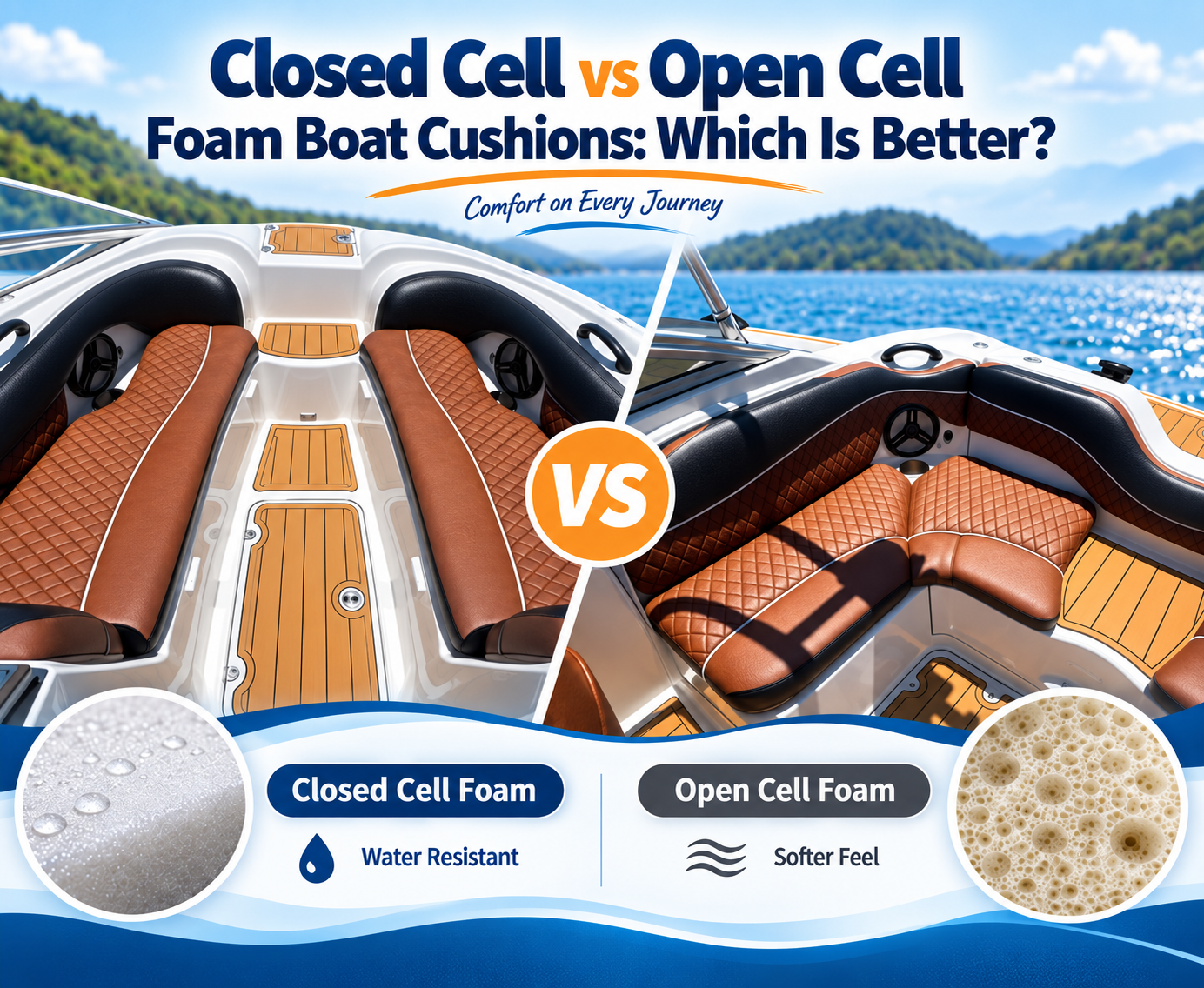
| Factor | Closed-cell | Reticulated (Dryfast) | Conventional open-cell |
|---|---|---|---|
| Structure | Fully sealed bubbles | Open, interconnected, large pores | Open, fine pores |
| On contact with water | Absorbs nothing | Water flows straight through | Absorbs and retains — sponge |
| Drying speed | Wipe the surface | Fast | Very slow; may never fully dry |
| Comfort | Firm, sweaty | Softer, breathable | Softest |
| Breathability | Poor — traps heat | Good | Good |
| Buoyancy | Yes — floats | No | No |
| Typical use | Buoyancy / absolute water exclusion | Exterior cockpit, sun pads | Interior berths |
| Failure mode | Cover delamination | Long-term UV breakdown | Waterlogged, mouldy, collapsed |
Note the buoyancy row. Sailing Eurybia points out a practical advantage: closed-cell foam floats — if a cushion goes overboard it will not sink. This is why USCG Type IV throwable cushions must use closed-cell.
The "closed-cell is always best" line quietly ignores something owners report repeatedly.
| Source | Owner report |
|---|---|
| Sailboat Owners (2020-09) | "A friend with a sister ship had closed cell foam cockpit cushions and I found them hard and uncomfortable." |
| SailNet (2016-04) | "The boats we have visited with closed cell foam cushions we find most uncomfortable. They are just too firm." |
| Morgan's Cloud (2021-02) | "Closed cell foam waterproof fabrics get sweaty and unpleasant in hot weather." |
| YBW (2016-05) | Positive: "It will not absorb water, and it's firm yet reasonably comfortable. Now on its fifth year." |
These reports are not contradictory — they describe different use cases. For short sessions where durability and buoyancy matter, closed-cell is acceptable. For long periods of seated use, firmness and heat retention become real problems.
FoamByMail (2024-05) describes the mechanism: large interconnected cells facilitate rapid water transfer and airflow, ensuring quick drying — typically with an antimicrobial treatment. It delivers two things closed-cell cannot: comfort (suitable for long seated use) and breathability (no sweat trap). The trade-off: it is not waterproof, it is non-retaining.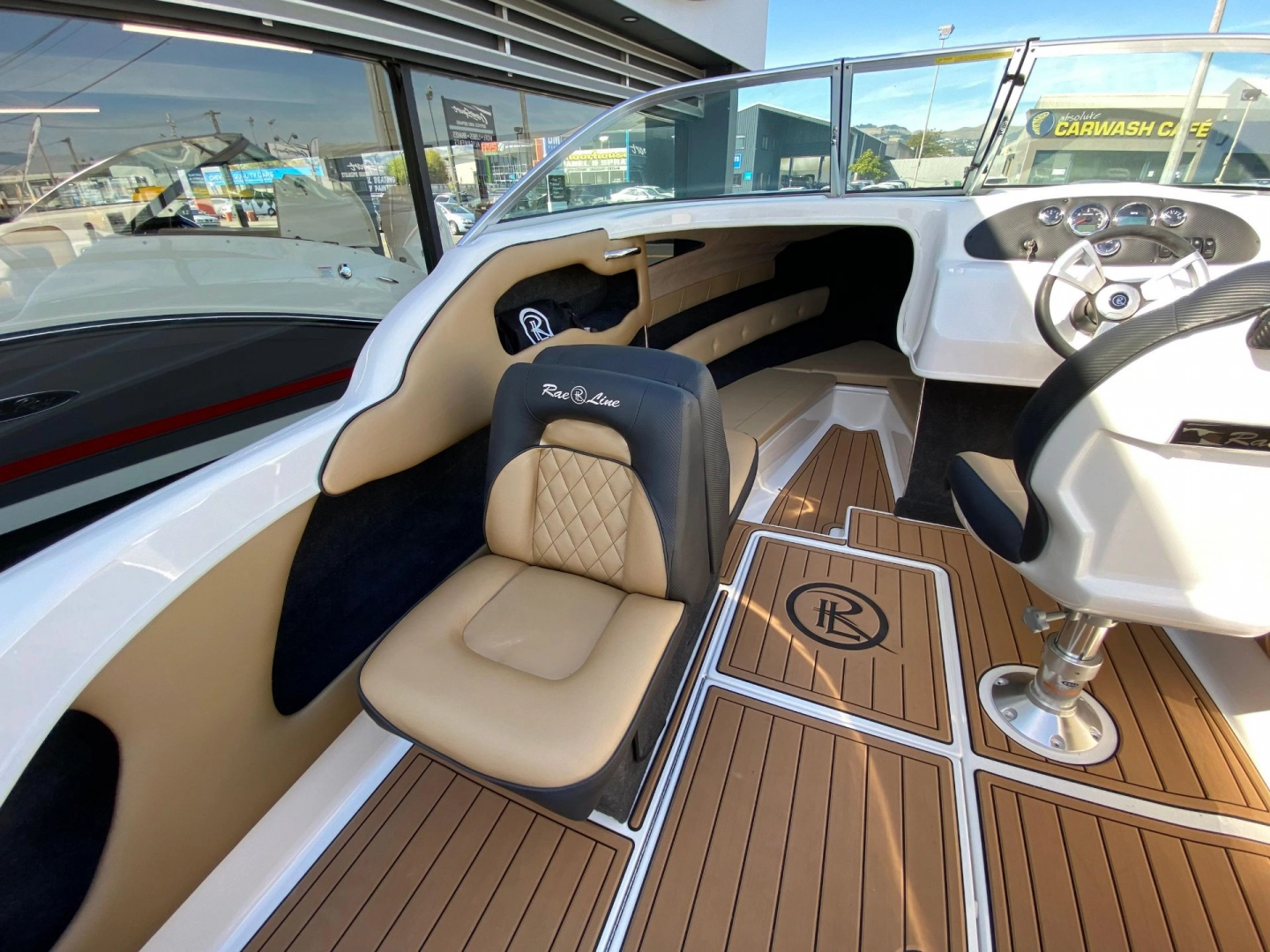
| Construction | Best for |
|---|---|
| Pure closed-cell | Buoyancy (Type IV), absolute water exclusion |
| Pure reticulated (Dryfast) | Exterior cockpit seating, sun pads — mainstream |
| Closed-cell base + reticulated top | Water stands under the seat |
| Reticulated base + soft open-cell top | Comfort-priority exterior seating |
| Pure conventional open-cell | Dry interior berths only |
| # | Question | Answer |
|---|---|---|
| 1 | Does it need to float? (Type IV, overboard use) | Closed-cell. No substitute. |
| 2 | Fully enclosed, dry interior? (berth) | Conventional open-cell is fine |
| 3 | Exterior with long seated use? (cockpit, sun pad) | Reticulated (Dryfast) — most exterior cushions |
| 4 | Water stands under the seat? | Closed-cell base + reticulated top |
| 5 | Short sessions, durability first? | Closed-cell acceptable — expect firmness and heat |
The foam decides whether water can leave; the cover decides where it enters. Specify them together:
The popular "if it can get wet, use closed-cell" rule omits the foam category the industry actually relies on. The correct split is three ways: closed-cell (buoyancy), reticulated Dryfast (mainstream for exterior seating), conventional open-cell (interior only).
Closed-cell's genuine weakness is comfort — multiple forums independently report "too hard" and "sweaty."
Visit marinedeckfactory.com to learn more about our PE/EVA foam boat flooring sheets.
We support free samples, custom colors, free design, and professional guidance for CNC customers.
Contact us through the form below and our team will help you find the right material solution.
Q1. Is closed-cell or open-cell foam better for boat cushions?
It depends on position. Closed-cell where buoyancy is needed; reticulated open-cell (Dryfast) for exterior cockpit seating; conventional open-cell for dry interior berths. "Always closed-cell" is an oversimplification.
Q2. Is Dryfast foam open-cell or closed-cell?
Open-cell — specifically reticulated open-cell, with large interconnected pores. Marine Fabricator recommends it for exterior boat cushions on exactly this basis.
Q3. Why are closed-cell cushions uncomfortable?
The sealed-bubble structure is firm and does not breathe. SailNet and Sailboat Owners both describe them as too hard; Morgan's Cloud notes they get sweaty in heat.
Q4. Does reticulated foam absorb water?
It gets wet but does not retain — water flows through and dries quickly. Fundamentally different from conventional open-cell.
Q5. Does closed-cell foam float?
Yes. Its unique advantage, and the reason USCG Type IV throwable cushions must use it.
Q6. What foam should exterior cockpit cushions use?
Reticulated (Dryfast) is the industry mainstream. Where water stands beneath, use a closed-cell base with a reticulated top.
Q7. Is layered foam construction worth it?
Yes. WeCutFoam identifies a DryFast base with a thin softer top as common professional practice; a Cruisers Forum owner uses a closed-cell base under DryFast for standing water.


