When choosing EVA boat flooring, durability and long-term stability matter most. In marine environments, EVA foam sheets must resist UV exposure, saltwater, moisture, and heavy foot traffic. Poor-quality materials can fade, peel, crack, or deform over time.
As a factory specializing in EVA marine decking, we know durability comes from high-grade raw materials, stable structure, precise processing, and strict quality control—not just surface appearance.
1. Raw Material Control: The First Step to Long-Lasting EVA Marine Decking
The performance of EVA foam sheets for boats begins with the base resin and foam density.
- Density affects compression resistance and rebound performance.
- The EVA/PE ratio determines softness, flexibility, and dimensional stability.
- High-density closed-cell EVA foam offers better anti-crush performance and longer service life on boat decks.
2. Production Processes That Shape Durability and Appearance
2.1 Foaming Process
The foaming stage determines whether EVA marine decking achieves a stable internal structure.
Key factors include:
- Temperature control
- Pressure balance
- Even expansion rate to avoid bubbles or density variations
A uniform closed-cell structure enhances water resistance and long-term stability.
2.2 Calendering & Sheet Forming
Sheet forming directly affects appearance and performance:
- Stable thickness across the entire sheet
- No ripples, waves, or edge distortion
- Smooth surface suitable for CNC engraving
2.3 Adhesive Lamination
- For marine decking for boats, adhesive quality is crucial.
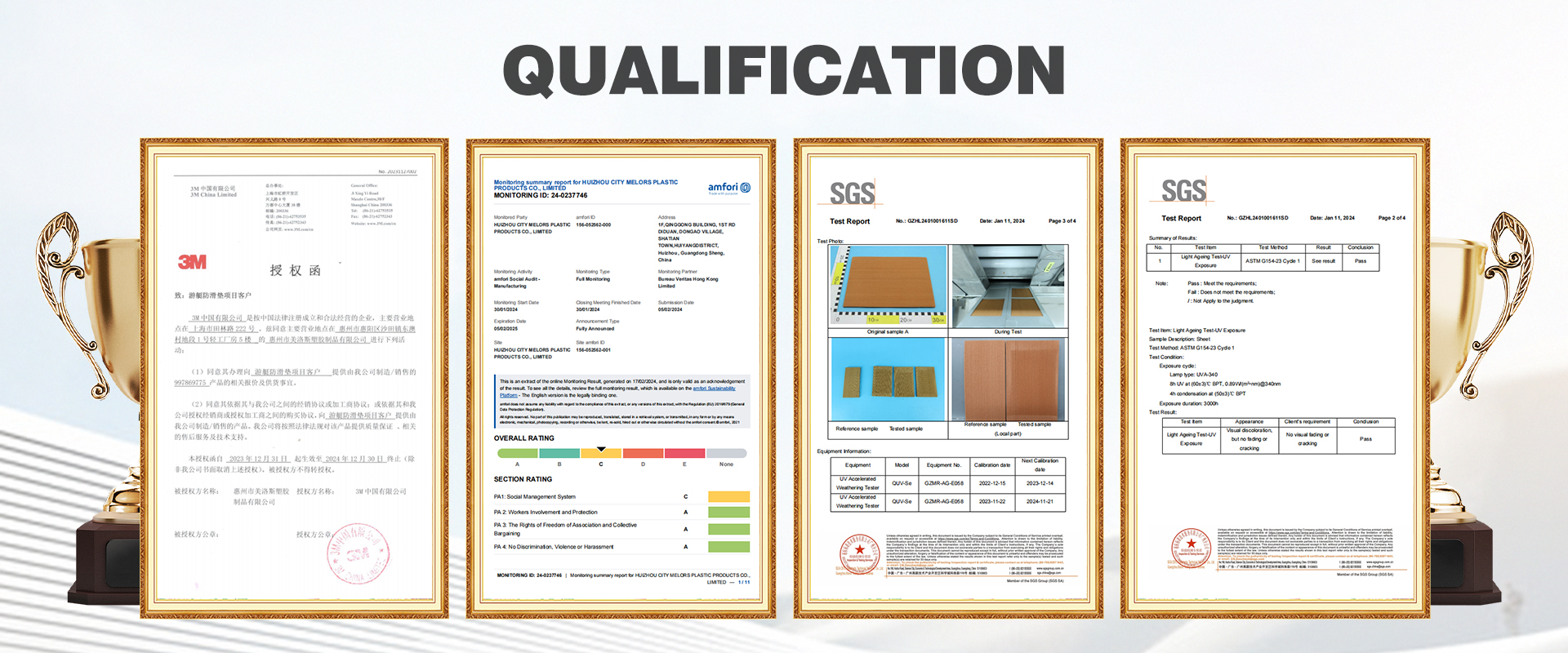
- Use authentic 3M marine-grade adhesive or equivalent high-performance glue
- Hot lamination improves bonding strength
- Proper curing time increases peel strength and long-term adhesion
Weak adhesive layers are the most common cause of peeling and customer complaints.
3. Structural Design: Why Construction Determines Lifetime
3.1 Dual-Layer and Triple-Layer Structures
Multi-layer EVA foam sheets for boats provide:
- Cleaner CNC engraving results
- Higher tear resistance
- Better dimensional stability
Especially for teak-style patterns, a stable lamination structure is essential.
3.2 Surface Texture and Anti-Slip Design
Patterns add more than just aesthetics:
- Brushed – soft and comfortable
- Diamond – strong anti-slip grip
- Teak – drainage + appearance
- Dot or micro-texture – easy cleaning and maintenance
A good texture improves traction, drainage, and safety.
3.3 Color Choices and UV Performance
- Deep colors tend to absorb more heat, while light colors generally offer better UV resistance.
- Choosing stable pigments and UV-resistant formulas helps extend the lifespan of marine EVA decking.
4. Environmental & Durability Testing: Verifying Performance
To ensure performance in real marine conditions, the following tests are essential:
- UV aging test (up to 3000 hours)
These tests validate the actual lifetime of EVA foam sheets for boats before mass production.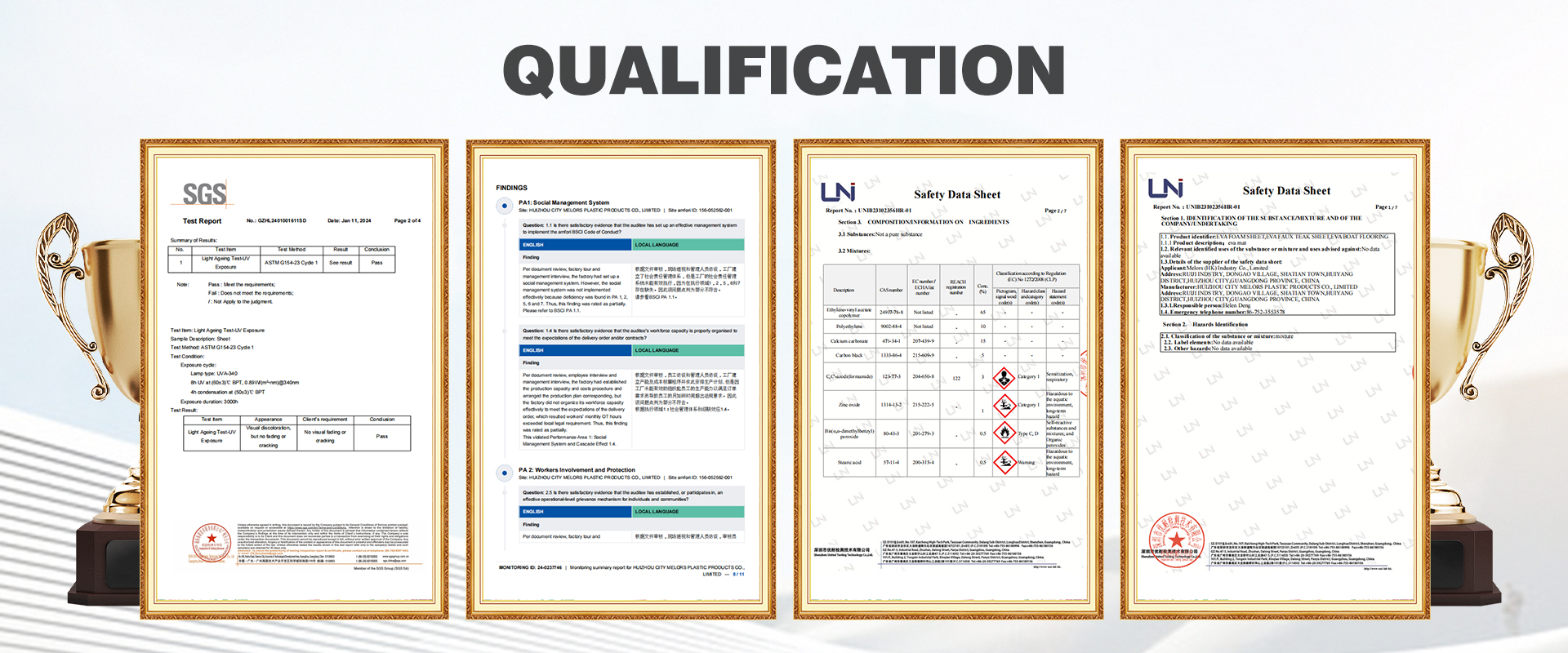
5. Final Processing:
How Good Material Becomes a Good Product
Even high-quality EVA sheets can fail if final handling is poor.Key factors include:
- Ensuring sheets stay flat before CNC cutting
- Matching CNC depth to foam layers
- Avoiding cutting errors
- Using reinforced packaging to prevent deformation during transport
- Packaging options such as flat stacking or reinforced cartons improve product stability.
Durability is not accidental. It is the result of:
- High-quality raw materials
- Stable formulas
- Advanced production procedures
- Rigorous testing
- Full-process QC
- Structural design optimized for marine environments
High-quality manufacturing is the foundation of long-lasting marine decking for boats—and the key to long-term customer success.Explore factory-direct EVA boat flooring sheets designed for durability and CNC cutting—learn more at marinedeckfactory.com


